Those who arrive at Thekla can see little of the city, beyond the plank fences, the sackcloth screens, the scaffoldings, the metal armatures.... If you ask, "Why is Thekla's construction taking such a long time?" the inhabitants continue hoisting sacks, lowering leaded strings, moving long brushes up and down, as they answer, "So that its destruction cannot begin...."
—excerpted from Invisible Cities, by Italo Calvino 
1. Tourists along the Bund, 2. Baby chicks
----- CITY GUIDES -----
The lighting speed of development in Shanghai means that if the ink has dried in your guidebook the facts are already out of date... It wasn't long after hitting the ground in Shanghai that we realized that our Lonely Planet was sadly behind the times. Printed in 2006, it only showed 2 subway lines. Here we are in 2009, and Shanghai already has 8 subway lines. And if the flurry of construction we saw everywhere is any indication, my little mini-guide below will also be imminently outmoded. Best to consult those on the ground and in the know; here are some of my favorite online city guides for Shanghai:
• Superfuture: Shanghai - This downloadable PDF is an indispensable guide for any design-hound, well worth the $20. Superfuture's neighborhood guide helped us navigate the twisty lanes of the French Concession to the doorsteps of many cool little boutiques.
• Urbanatomy: Shanghai - A good resource to check out what cultural and art events are going down during during your stay.
• SmartShanghai.com - Another good event guide and venue listing, with taxi directions in Chinese!
• Unlike: Shanghai - If you have an iPhone, check out this awesome city guide for their customizable mobile tours.
• Jongo: Shanghai - It's terrible as a search engine, but once you do find a listing, Jongo very helpfully provides you with the Chinese characters, pronunciation using standard pinyin with tones and an audio file, a map, directions for the taxi driver in Chinese, videos and photos and a description of the destination in English.
----- NAVIGATING -----
On foot
The flavors (literally & figuratively) of Shanghai are in its streets and backalleys. So grab a good map, explore on foot and stop at the snack stalls along the way! All of Shanghai's street signs are in Chinese and English so, although the most useful maps should probably have Chinese on them, we were able to make do with a stapled printout of Superfuture's PDF which is entirely in English.
By subway
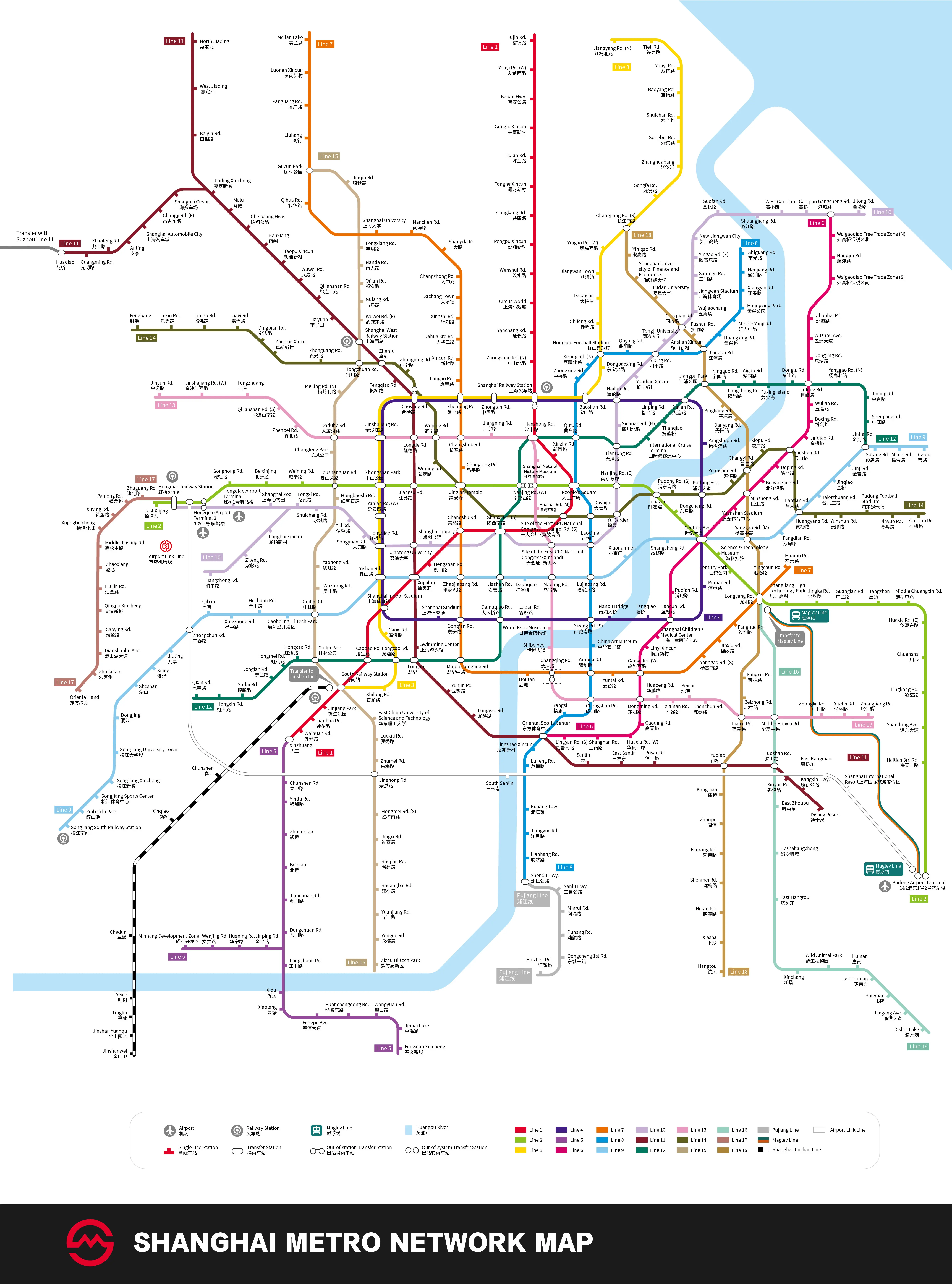
The recently developed metro is easy to navigate and changing by the second -- three subway lines were added in 2007 alone! Here's a current map (current as of this writing, anyhow). Watch out for the madhouse at the Shanghai Railway Station (上海火車站 / Shànghǎi Huǒchē Zhàn) metro stop, though.
By taxi
If your feet get weary or your destination is far from a subway station, taxis are easy and relatively cheap. The taxi drivers don't speak English, so here is where a good map becomes essential. This one has Chinese, Pinyin Romanization and English! My Mandarin is horrendous, so I will surely purchase a copy for our next trip!
3. Afternoon, 4. Market
----- WE STAYED -----
Donghu Hotel (東湖賓館 / Dōng Hú Bīn Guǎn)
For our 3-night, 4-day stay in Shanghai, we chose the Donghu Hotel (東湖賓館) in the French Concession. Our deluxe room was humongous, had a large sunroom and was situated in Building 1, the former residence of a 1930's Shanghai gangster named Du Yuesheng. With lavish carved wood details in the lobby, an outsized fountain in the front yard, and the faint smell of smoke clinging to the upholstery, Donghu still retains the lingering aura of a Mafioso homestead. Maybe that's part of it's quirky charm? In any case, there's no denying that 4-star accommodations starting at $80/night is a great value. Call them or book via Expedia to get better rates than what they have listed on their website, and make sure you stay in Building 1.
There's no shortage of lodging establishments in Shanghai, but I have my eye on these boutique hotels for my next visits:
• Quintet - Only five rooms, but each so beautifully designed!
• Old House - I know Shanghai is constantly growing and modernizing, but I can't separate my mental image of this storied city with noir and romance...
• Urban Hotel - The location isn't quite as romantic as the tree-lined lanes near the Donghu Hotel, but Urban has a clean aesthetic and a clean philosophy.
5. French Concession, 6. The Pottery Workshop
----- WE EXPLORED -----
Shanghai is a city of neighborhoods, each with it's own enduring character... The Concessions arose at the end of the Opium Wars as foreign interests carved out portions of Shanghai to live and lease within. These days the Concession are more likely divided up along class lines than national ones.
The French Concession (上海法租界 / Shànghǎi Fǎ Zūjiè)
Dodging bicycles and munching street snacks, we wandered the French Concession and slowly absorbed the fact that we were in the city so often called the "Paris of the East." Of all of Shanghai's varied neighborhoods, the French Concession, with it's shady tree-lined streets and beautiful 1930s era lane houses, preserves and captures this sentiment the best.
• TheFrenchConcession.com - This blog covers the ins and outs of the French Concession post by post.
• ToranaHouse.com - This gallery's webpage breaks the neighborhood down nicely and even provides a handy map.
• Xintiandi (新天地 / Xīntiāndì) - A somewhat yuppie-fied area of restored shikumen ("stone gate") houses with fancy-pants watering holes and restaurants.
• Taikang Lu (泰康路) - An area of art studios and design boutiques packed into old shikumen lanes. It seems to have happened rather quickly, but sadly Taikang Lu has already become somewhat of an Orient-themed mall, albeit with a slight hipster, artsy vibe. There are still some bewildered elderly residents trying to dry their laundry among the postcard racks, though....
• Changle Lu, Xinle Lu, Anfu Lu - Huaihai Zhong Lu (淮海中路 / Huáihǎizhōnglù) is the main commercial drag where you can find the flagship stores of international brands, but running parallel to it to the north are Changle Lu (長樂路 / Chánglelù), Xinle ( 新樂路 / Xīnlelù), and Anfu Lu (安福路 / Ānfúlù), featuring local designers and boutiques. The downloadable Superfuture PDF guide will point you to the best choices among these. My favorite shops in the French Concession included The Thing for funky t-shirts, Source for sneakers, The Pottery Workshop for contemporary ceramics and Hi Panda for... um... your angry panda needs.
The Bund (外滩 / Wài tān)
On the western bank of the Huangpu River, Western banking houses and trading companies built during the late 1800s and early 1900s represent a colonial past. Opposite the Bund in Pudong, the Oriental Pearl Tower and the World Financial Center make for a futuristic vision and a remarkable skyline. Much of the Bund is currently under construction as Shanghai prepares for Expo 2010, so if you're thinking of staying in a hotel on the Bund this year, you might want to reconsider. Despite the construction, there's still a viewing platform along the river from which to admire the smoggy Pudong skyline. Along the Bund itself, you can still glimpse a bit of Shanghai's mercantile history through the scaffolding.
• Identifying the buildings - Print out this guide and use it to identify the Bund's impressive collection of turn of the century European architecture.
7. Walking, 8. Shanghai
Old Town (南市 / Nán shì)
After our walk along the Bund, we headed south for something different. The area contained by the curved Renmin Lu was once delimited by Shanghai's old city wall. That city wall, built in 1555 to protect the city from Japanese pirates, was torn down in 1911.
I had an old unused roll of black and white film that I bought 9 years ago. It had been through airport checked bag screening several times and I wasn't too sure whether any of the photos would come out. But a walk through Shanghai's Old Town seemed like the perfect time to romanticize the past with it. It was a sunny day in Shanghai, and everyone seemed to take the opportunity to wash and hang dry their winter jackets and blankets.
9. Street, 10. Sunny Day
In the 1800s, even as foreign influences dominated the Bund and the Concessions, the Old Town was where locals went about their daily lives in tiny, lesser-quality shikumen ("stone gate") apartments without indoor plumbing. Here, kitchens are outdoors and residents share the public bathrooms scattered throughout the winding alleyways. Day-to-day life seems to be continuing in this form, out on the streets and in the alleyways, even amidst the rampant tourist traffic. For much of our walking I put my camera away; it felt like we were traipsing through strangers' kitchens and backyards. I didn't want to intrude, but strolling through these lanes and tempting my voyeuristic impulses made me momentarily wish I lived here with my family, so we could sit down for dinner at a little plastic table set out on the street and slurp a bowl of noodles among our neighbors. Of course, the lack of indoor plumbing is kind of a deal-breaker for me.
11. Bicycle, 12. Cultural Revolution
With those modern hotels and office buildings towering in the background, I wonder how long it would be before the wrecking balls arrive to make way for more futuristic skyscrapers... But for now, the area seems protected by its historical status.
• Movius' Old Town Walking Tour - I recommend wandering aimlessly, but this page has a nice suggested walking itinerary of the Old Town.
• Slums of Shaolin - Take a voyeuristic lil' peek into Old Town's back alleys on this blog.
• Dongtai Lu Antiques Market (東台路古玩市場 / Dōngtái Lù Gǔwán Shìchǎng) - The vendors will be sure to tell you that everything is "Old. Really Old." I'm pretty sure there's brand new factory somewhere in southern China churning out these "vintage" Cultural Revolution Mao paraphernalia. Nevertheless, cool retro-looking stuffs abound, so bargain hard...
• Yu Gardens (豫園 / Yù Yuán) - If you were looking for something more... stereotypically Chinese... check out Shanghai's Chinatown. It's even got a Dairy Queen and a Burger King! There's actually a very pretty (I guess, from the pictures) Chinese garden and teahouse buried somewhere in there, but we didn't go because the whole place was really crowded. Definitely a place to avoid on weekends.
----- WE ATE -----
During our 4 days in Shanghai, we subsisted mostly on delicious and cheap street food, but we did set aside one evening (and... uh... a couple hundred dollars) for a French dinner at the Shanghai outpost of the famed, 3-Michelin-star Jean George. Our eating experiences in Shanghai deserve a separate post, so stay tuned....
13. One..., 14. Street eats
Wednesday, May 27, 2009
Shanghai